


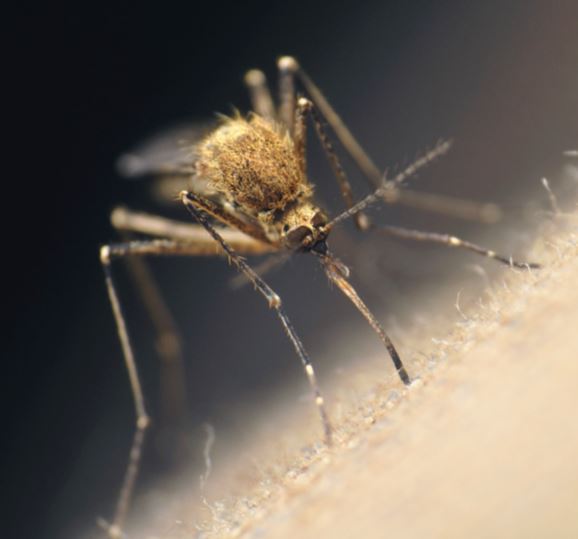
By Donna Durckel
COUNTY OF SAN DIEGO COMMUNICATIONS OFFICE
To protect the public and keep mosquitoes from potentially spreading West Nile virus (WNV), the County is scheduled to conduct ultra-low volume, pesticide-mist treatments by truck this week to reduce the number of adult mosquitoes on approximately 6,000 lots in Coronado. The area being treated includes from 2nd Street in the north to Ocean Boulevard in the south, F Avenue in the west, and Glorietta Boulevard to the east. The exact boundaries of the treatment can be found on the County’s Adult Mosquito Control Information webpage.
County Vector Control truck treatments use AquaDuet—a pesticide that mimics natural insecticides found in chrysanthemum flowers, is approved by the Environmental Protection Agency, and does not pose a risk to people and pets as applied. The treatments are scheduled to take place from 1 a.m. to 6 a.m. on Friday, September 25 and from 1 a.m. to 6 a.m. on Saturday, September 26. Additional treatments may also be applied the following week, depending on conditions.
The County’s surveillance of mosquito activity found elevated numbers of mosquitoes in Coronado, some of which were positive for WNV. More information, including a map of the treatment area, frequently asked questions, and contact information for Vector Control, can be found on the Vector Control Program Adult Mosquito Control Information webpage.
The treatments will be applied in the early morning hours when most people are not outside. It is practically invisible and dissipates in under 30 minutes. Beekeepers and those with insects and fish kept outdoors are encouraged to cover their habitats during treatments. Beekeepers registered with the County’s Department of Agriculture, Weights and Measures can request to receive advance notice of treatments in their area.
As of Sept. 16, there have been 11 reported human cases of WNV in San Diego County this year, three of which were Coronado residents. This is the most local WNV infection since 2016.
SYMPTOMS
Some people who become infected can suffer fever with other symptoms such as headaches, body aches, joint pains, vomiting, diarrhea, or rash. In rare cases, West Nile virus can make people extremely ill and even kill them. If you have symptoms, seek medical care.
County officials said people should continue to follow the County’s “Prevent, Protect, Report” guidelines to protect themselves from mosquitoes. Those include finding and dumping out standing water around homes to keep mosquitoes from breeding.
PREVENT MOSQUITO BREEDING
Dump out or remove any item inside or outside of homes that can hold water from rain or landscape irrigation such as plant saucers, buckets, garbage cans, toys, old tires, and wheelbarrows.
Mosquitofish, available for free by contacting the Vector Control Program, or mosquito dunks may be used to control mosquito breeding in backyard water sources such as stagnant swimming pools, rain barrels, ponds, fountains and horse troughs.
PROTECT YOURSELF FROM MOSQUITO BITES
Protect yourself from mosquito-borne illnesses by wearing long sleeves and pants or use insect repellent when outdoors. Use insect repellent that contains DEET, picaridin, oil of lemon eucalyptus, para-menthane-diol, 2-undecanone or IR3535. Make sure screens on windows and doors are in good condition and secured to keep insects out.
Report increased mosquito activity, unmaintained green swimming pools, and other mosquito-breeding sources, as well as dead birds—crows, ravens, jays, hawks, and owls—to the County Vector Control Program by calling (858) 694-2888 or emailing vector@sdcounty.ca.gov.
Go to San Diego County’s “Fight the Bite” website to learn how to prevent and protect against West Nile virus and mosquitoes.
For more information about West Nile virus, go to the County Health and Human Services Agency’s West Nile virus webpage.
To accommodate operational needs, media availability for interviews will be held between 9:30 and 11:30 a.m. on Friday, September 25 at the County Operational Center next to the community garden in the center courtyard.