


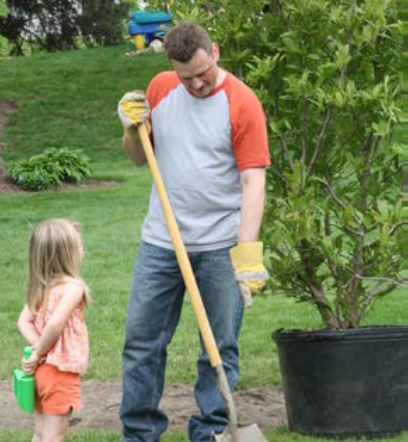
Trees provide many benefits to the environment and our health and well-being. These long-lived members of our landscapes and communities provide shade, help reduce energy costs, clean the air we breathe, prevent soil erosion and stormwater runoff, and attract and provide homes for birds and pollinators. National Arbor Day, celebrated on the last Friday of April, recognizes the important role trees play in our environment.
Spending time among the trees also helps boost our immune system. Studies reveal that tree-filled landscapes help decrease domestic conflict, as well as aggression and violence at schools. A mindful walk through the woods, known as forest bathing, helps reduce blood pressure and stress. It increases focus and energy levels, improves sleep, and much more.
When planting new trees make sure to select one that will fit in the space when mature and thrive in the growing conditions. Plant tags and catalog descriptions can provide you with this important information. Consider including trees that provide multiple seasons of beauty with flowers, fruit, fall color, and form. Look for those that also support birds and pollinators as they deliver many other environmental benefits.
Select a planting location away from overhead and underground utilities to avoid future conflicts. Avoid plants that eventually could grow into wires or structures that may interfere with utilities and power transmission, creating a real hazard.
Always call 811 or file a request online at https://call811. com/811-In-Your-State at least three business days before putting the first shovel in the ground. When your request is received, this non-profit group contacts all the appropriate underground utilities. The utilities’ locators will then mark the location of the underground utilities in your work area. Contacting them first reduces the risk of injury, the inconvenience of accidentally knocking out power, cable, or other utilities, and the potential cost incurred to repair a utility you damage when skipping this step.
Once the location is cleared, you’re ready to start planting. Locate the tree’s root flare (where the roots curve away from the trunk) by gently pulling the soil away from the trunk as needed. Dig a hole two to five times wider and the same depth as the distance from the root flare to the bottom of the root ball. Set the tree in the hole, carefully remove it from the container, and loosen or prune off any circling roots. Cut back burlap and wire baskets when planting balled and burlapped trees.
Plant the tree so the root flare is even with or slightly above the soil surface. Roughen the sides of the hole and backfill with the existing soil. Water thoroughly and spread a two-to-three-inch layer of mulch over the soil surface, keeping the mulch away from the tree trunk.
Continue watering throughout the growing season, the following year, and as needed once established. Check the soil moisture and thoroughly water the root ball and surrounding soil when the top few inches of soil are crumbly and slightly moist. Apply ten gallons of water for every inch of the trunk’s diameter at four- and one-half feet high.
Melinda Myers’ website is www. MelindaMyers.com which features gardening videos, audio tips, free webinars, monthly gardening tips, and other gardening information.