


Plan and plant a variety of colorful spring flowering bulbs this fall to welcome in spring with a beautiful floral display. Fill garden beds with deer- and rabbit-resistant bulbs like daffodils, hyacinths, alliums, fritillaria and ranunculus. Deciding how many bulbs are needed to make an impact can be challenging. The Spacing Recommendations for Fall-Planted Bulbs blog on longfield-gardens.com offers insight and guidance. This plus the amount of garden space, design goals and of course budget can help gardeners decide how many bulbs to add to their gardens in the fall. Daffodils (Narcissus) are not only critter resistant but low-maintenance and long lasting in the landscape. There are a wide variety from the traditional yellow Dutch Master to the more unique double-flowered varieties like Sherborne with its giant lemon-yellow flowers held upright on sturdy stems and the long-lasting, heat-resistant Tahiti with bright yellow blossoms and red-orange ruffles. Daffodil flowers also come in a variety of sizes and color combinations. There are all white and yellow varieties and those with bicolor blooms of white or yellow petals with white, yellow, peach or orange coronas, the daffodil flowers’ cup-like structures. Some, like Cassata and Cum Laude, have split coronas of different colors, adding a distinctive flair to spring displays. For more information read the All About Daffodils guide (longfield-gardens.com) to help with planning, planting and growing these beauties. Both hyacinths and grape hyacinths are fragrant and resistant to animal browsing. Grow some near walkways or on a patio or deck where the fragrance can be enjoyed. Plant them in groups of five or more for greater impact and mix them with other spring flowering perennials for double the floral impact or with summer bloomers to extend the bloom time in the garden. Despite their small stature, grape hyacinths (Muscari) can put on quite a display when planted in mass. Some use them to create seasonal ribbons of color in garden beds. Others combine Muscari with other taller spring flowering bulbs for multiple layers of spring color. As spring bulbs fade but before summer perennials fill garden beds, alliums provide bursts of colorful blooms. Many are familiar with the huge spherical blossoms of the giant allium but there are many other options with flower sizes and heights suitable for any size and style garden. Alliums make great cut flowers, the pollinators love them, and deer tend to leave them be.
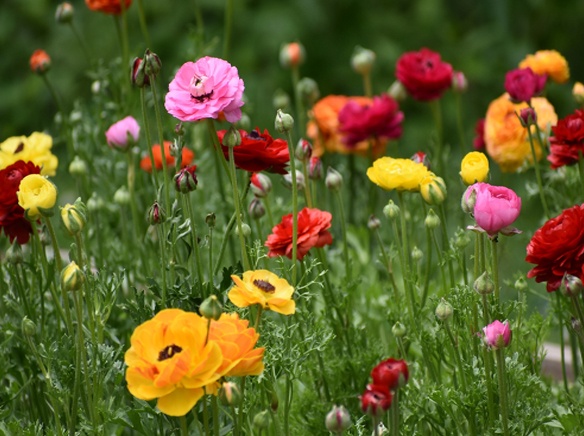
Enjoy some subtle beauty with checkered lilies (Fritillaria meleagris). Their unique dangling flowers with a checkered pattern of colors and grass-like foliage are suitable for just about any garden. Their taller and showier relative crown imperial (Fritillaria imperialis) grows 3 feet tall with a cluster of downward-facing orange or yellow flowers topped with a tuft of greenery. Fill containers and garden bouquets with lovely ranunculus flowers. These cool weather flowers combine nicely with pansies, nemesia, columbine and other spring bloomers. Gardeners in zones 4 to 7 should plant them in early spring. Grow ranunculus in light, well-drained soil and protect the plants from frost. Most other fall-planted flowering bulbs need cold winters to initiate root development and flower formation. Gardeners in zones 8 to 11 will need to select bulbs suitable to warmer winters, like the Jonquil and Tazetta types of daffodils, Dutch iris, freesia, DeCaen and St. Brigid anemones, and of course, ranunculus. For other spring flowering bulbs, gardeners will need to provide a chilling period of 10 to 14 weeks at 35 to 45°. Enhance the beauty of spring gardens with these animal-resistant flowering bulbs. Plan and plant this fall for months of beauty and enjoyment next spring.
Melinda Myers website is www. MelindaMyers.com