


Trees are the long-lasting framework of our landscape providing many benefits to our community, environment, landscapes and lives. They provide shade, help reduce energy costs and provide food and building materials. Trees also help manage storm water, reducing the risk of storm water runoff, soil erosion, local flooding and storm water entering the storm sewers.
Fall is a great time to plant trees. The soil is warm and the air is cool, making it easier for plants to adjust to their new location and the gardener doing the planting. Follow these important tree planting tips to ensure the health and longevity of these important additions to the landscape.
Always select trees that are suited to the growing conditions and will fit the mature space once mature. This will ensure a heathier long-lived tree with less effort.
Once the planting site is chosen, call 811 at least three business days before planting. This free utility locating service will locate underground utilities to help reduce the risk of damage and personal injury caused by digging into buried utilities.
Locate the root flare, the place where the roots curve away from the trunk, by gently pulling the soil back from the trunk. It is important to have the root flare at or slightly above the soil surface for the health and longevity of the tree.
Dig a broad shallow hole at least two to three times wider than the root ball and only as deep as the distance between the root flare and bottom of the root ball. Digging a deeper hole can result in the soil settling and creating a water-collecting depression around your tree. Roughen the sides of the planting hole to make it easier for the roots to grow into the surrounding soil.
Always move trees by the root ball not the trunk to avoid damaging the roots. For container-grown trees cut away the bottom of the pot and set it in the hole with its best side facing toward the desired direction. Cut away the pot and remove or cut any circling roots.
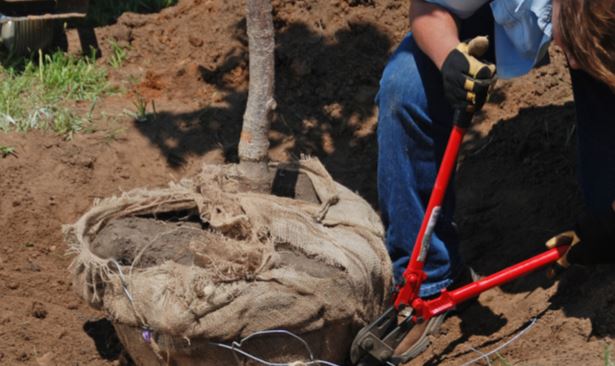
For balled-and-burlapped trees remove the bottom of the wire basket and set the tree in the hole. Once positioned, peel back or cut away the burlap, remaining wire basket and twine. Check for and remove or cut any circling roots.
Backfill with the existing soil. Amending the soil discourages the roots from growing beyond the planting hole, preventing them from developing a robust root system. Water thoroughly at planting and whenever the top four to six inches of soil are crumbly and dry. Spread a two-to-three-inch layer of wood chips over the surrounding soil, pulling the mulch away from the trunk of the tree to prevent rot and disease.
Wait a year to fertilize and several years before doing any major pruning. Just remove damaged and dead branches at the time of planting. Skip the stakes unless the trees are growing in a windy location or have a large canopy and small root system.
Enjoy the beauty of these new additions and the many benefits they provide.
Melinda Myers’ website is www. MelindaMyers.com.