


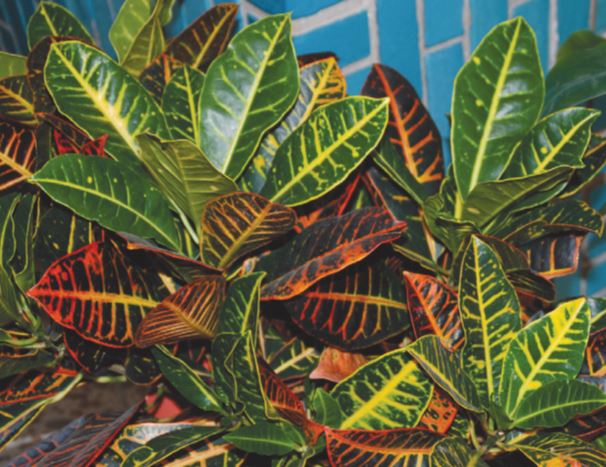
Bring a little fall color indoors by adding a croton to your indoor garden. Their colorful leaves echo many fall colors in the landscape, including red, yellow, orange, green and purple.
Croton leaf shapes can vary, adding to their ornamental appeal. They can be broad or narrow, shaped like an oak leaf, twisted like a corkscrew, or somewhat pinched in the middle. You may decide to buy a few to place throughout your home.
Grow crotons in a warm bright location with temperatures between 60° and 85°F. Avoid drafts, droughty conditions, severe temperature fluctuations and temperatures that remain below 50°F that can cause its leaves to drop.
Water plants thoroughly and often enough to keep the soil slightly moist during the summer months. Cut back on watering slightly during the winter as growth begins to slow. Only fertilize actively growing plants with a dilute solution of houseplant fertilizer.
Boost the humidity around this and other tropical plants by grouping them together to create an attractive display. As one plant loses moisture, transpires, its neighbors will benefit. Or make maintenance easy while improving the growing environment with gravel trays. Place pebbles, round flat glass stones or similar items in the saucer or tray. Set the pot on the stones above any excess water that collects in the tray. As the water evaporates, it increases humidity around the plant.
Prune leggy plants in early spring, if needed, to encourage branching and fuller growth. Consider i n creasing the amount of sunlight crotons receive to minimize this problem in the future.
If the croton leaves lose their color, displaying only green, it’s time to evaluate the amount of light the plant receives. When crotons receive sufficient light the yellow, orange, red and purple pigments mask the green chlorophyll. In low light the green chlorophyll masks the other colors. Moving plants to a brighter location or supplementing natural sunlight with artificial light will help improve the leaf color.
If the plant was doing fine for quite some time and just started losing color, see if the amount of light the plant receives has changed. Check to see if a nearby tree has grown larger blocking some of the sunlight, a new structure was installed nearby, or the window treatment has changed.
Excessive light can cause leaves to look dull while overfertilization can result in more lush green foliage. Check for insect pests, like mites and aphids, if there’s a bronzing or speckling of the leaves. A strong blast of water can dislodge many of these pests. Follow up with an organic lightweight horticulture spray if needed. Read and follow label directions whenever purchasing and applying any product for the safest and most effective control.
Enhance indoor fall décor further with the help of flowering potted plants. Combine small potted mums or asters with foliage plants in a decorative basket or set a small pot among the foliage in a large planter. Consider sinking a small empty pot in the soil when creating your indoor containers. Set a seasonal flowering plant in the empty pot so it looks like a permanent addition. Include small mums and asters for fall, poinsettias for the holidays, amaryllis for winter, azaleas for spring and more. This will minimize damage to indoor plant roots and make the switch out much easier with this technique.
Once fall fades to winter, continue to enjoy and appreciate the wonderful colors this tropical plant provides.
Melinda Myers’ website is www. MelindaMyers.com.