


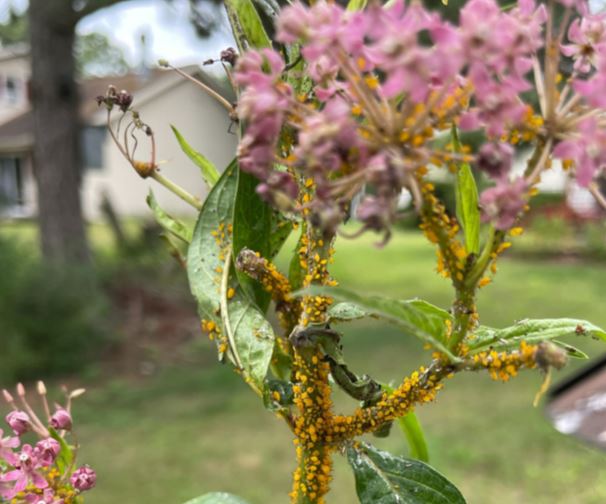
If you garden, you have likely encountered aphids on trees, shrubs or other garden plants in your landscape. Identifiable by their small teardrop-shaped bodies with cornicles, the two tail pipe-like structures that protrude from their back end. They come in a variety of colors, with or without wings, and some like the cabbage and wooly aphids are covered with a gray or white waxy substance. These insects feed on leaves, stems, flowers and roots by sucking the plant sap through a needle-like mouthpart. Some aphid species transmit diseases including cauliflower, cucumber, lettuce, tobacco and turnip mosaic viruses, plum pox and potato virus Y. Aphids, like whiteflies, scale and mealybugs, excrete a clear sticky substance called honeydew. It often covers the leaves, branches and objects beneath the plant. You may see ants, bees, yellow jackets, and flies feeding on the honeydew. Some species of ants protect the aphids from predators, move them to another plant when a new food source is needed and some create shelters or share their nest with the aphids. As the population grows damaged plants may develop bent and twisted leaves. When large colonies of aphids are present the plant may be wilted, stunted or new growth distorted. A black substance called sooty mold may develop on the leaves. This fungus feeds on the honeydew not the plant. A thick layer of sooty mold can prevent light from reaching the leaves, causing them to turn yellow and drop. Managing the aphids will help manage this problem. Before reaching for a chemical watch for nature’s pest managers to move in and take care of the problem. Predatory insects, like lady beetles, lacewings and hover fly larvae, eat aphids. One lady beetle can consume more than 5,000 aphids throughout all stages of its life. If nature is not handling the problem, try spraying the infested plant with a strong blast of water. This knocks many of the aphids off the plant and may provide sufficient control. Follow this, if needed, with an organic product such as a lightweight horticulture oil or insecticidal soap. These insecticides must contact the insect to kill it. They block the spiracles, small air holes in the insects’ exoskeleton, causing asphyxiation. The horticulture oil, like Year-Round Spray Oil, kills all stages of the insect it contacts but will not harm any beneficial insects that land on the treated plant. Repeat as needed and as always read and follow all label directions for these and any organic, natural or synthetic chemical. Keep your plants healthy with proper care to reduce the risk and avoid overfertilization that promotes lush succulent growth, which is more susceptible to insect and disease problems.
Melinda Myers’ website is www.MelindaMyers.com.